

Coworking didn’t die. It moved closer to your house.
For a long time, “coworking” meant exposed brick, long tables, and a downtown address. Coworking 1.0 solved the “I don’t want to work alone at home” problem for freelancers and early-stage startups. Then came 2.0: enterprises using flex as a portfolio tool—swing space, satellite teams, hybrid experiments.

What’s happening now is quieter but more important: coworking is evolving into neighborhood
offices—private-office-heavy buildings close to where people actually live.
Industry data over the last few years shows shared workspace in suburban areas growing significantly
faster than in urban cores, even as flexible space overall still represents a relatively small share of total
office inventory. The growth is real, but the story has shifted away from central business districts.
On the ground in Dallas–Fort Worth, you see that evolution in places like North Tarrant County, Allen, McKinney, Prosper and similar suburbs. The typical member is no longer just a freelancer: it’s 2–10 person firms that don’t need a tower, solo professionals who outgrew the kitchen table, and remote employees who can’t do their best work permanently at home.
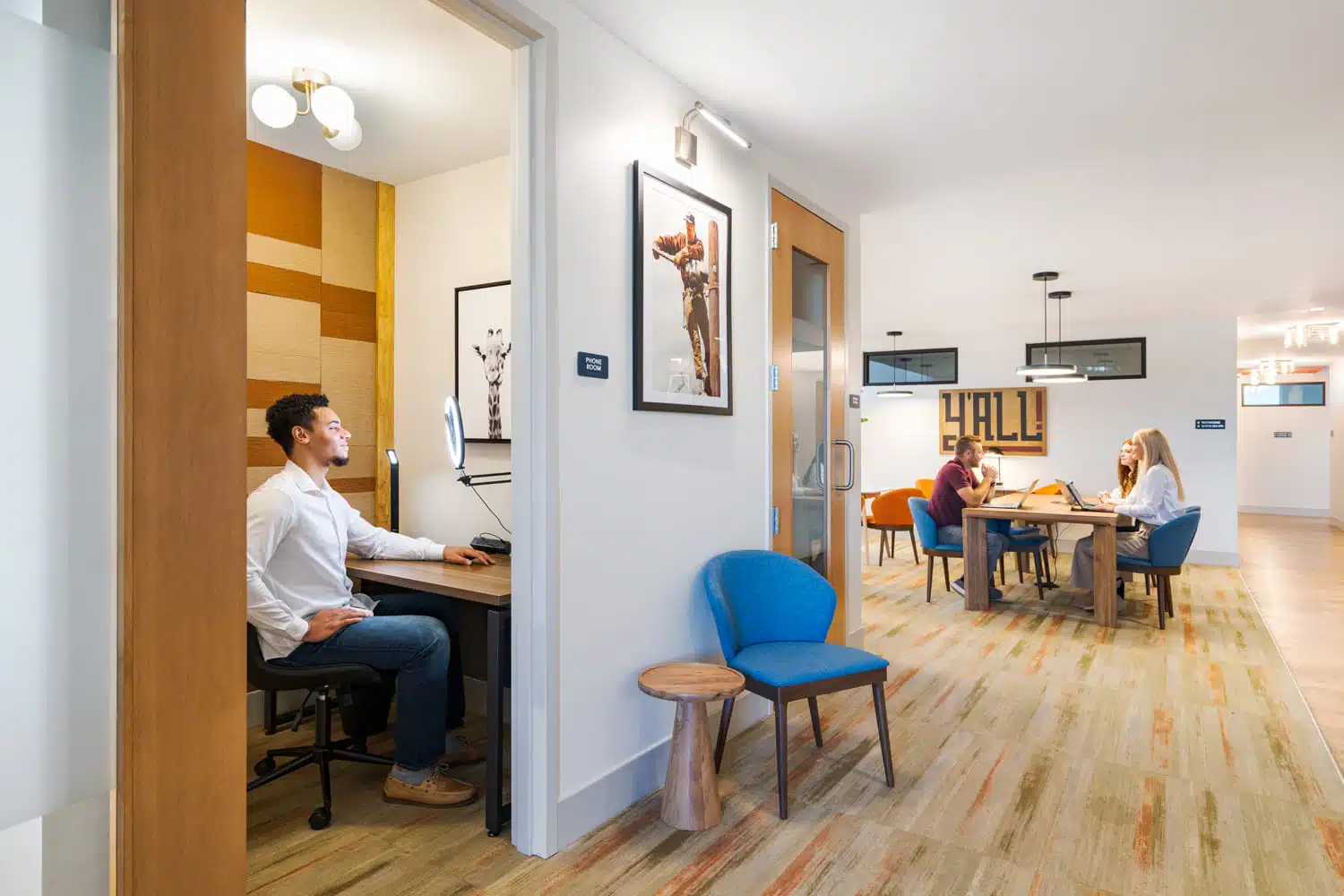
They’re not chasing vibes; they’re solving for a short drive, a door that closes, and a space they can
quietly build from.
Coworking started as a category. It’s becoming part of the neighborhood fabric around it.
The real question for operators now isn’t “Should we offer coworking?” It’s: are we building the kind of neighborhood offices that people’s lives are actually shifting toward?